1795
In the year 1795 the British took control of the Cape Colony to prevent the French from controlling it. Due to the interests in Australia and India, Britain used Cape Town as a port for the merchants' long voyages. The British returned it to the Dutch in 1803, but it was given up by the Dutch back to the British in 1806 ("British empire," 2012),("South africa ," 2012). This was significant as it started the colonization of many places in South Africa, which limited the independence of some Africans. It became a trading route between Indian and the British, which was an economic benefit.

("Cape colony," )
1807/1833
Due to the movement to end slavery in Britain, the British parliament stopped their global slave trade by passing the Slave Trade Act 1807. They then put an end to slavery in all their colonies with the Slavery Abolition Act 1833 ("South africa," 2012). This is significant as many Africans gained their freedom from slavery and regained some human rights and independence. The end of slavery stopped those that were organizing it from benefiting, as it would have caused an economic downfall with the production of their goods. This is because the cost of producing the goods and services would have increased due to having to pay their employees more money.

("The abolitionist," )
1867
During 1867 diamonds were discovered, which increased economic growth and immigration. The Boers and the British struggled while trying to control this economic resource. Diamonds were also discovered in Kimberly in 1871, gold was later discovered in Gaueng in 1886 ("South africa," 2012), (Lambert, 2012). This was significant from an economic perspective and still is as it produces a huge profit for many companies. This discovery increased jobs back then and still is employing a large percentage of people. It has increased trading as it is a major export for South Africa. The discovery has also increased the quality of life for many South Africans as it provides employment for them in order to support their family.

("Discovery of diamonds," )
1899
The South African War started in 1899, fought between the British and the Afrikaners, which lasted three years. There were 90 thousand Afrikaners and 500 thousand men on the British side. At the beginning the Afrikaners had some victories, but in 1900 the British overtook the Afrikaners and took control of Bloemfontein, Johannesburg, and Pretoria. In 1901 and 1902 the British destroyed tens of thousands of farms in the South African Republic and the Orange Free State, and placed the Afrikaner women and children in concentration camps. It is reported that over 25 thousand women and children died due to hunger, disease, and overcrowding in the camps ("British imperialism and,"). This was significant as it caused a lot of violence between the two groups fighting one another. This caused political tension between Holland and Britain as they were the two groups trying to colonize the same place. This was also significant as the Dutch accepted South African ways after they arrived, including their language. The British entered South Africa with the idea of imposing their ways into the South African culture, by keeping their language and adding Christianity.

("Canada & the," )
1948
The apartheid began in 1948. It is considered discrimination which separated people into three different groups. There were the black, white and colored people. Eventually Asians were added as a category of people. The races were assigned to different housing and business areas. Non-whites were not allowed to live in certain areas. The whites then owned over 80% of the South African land. There was segregation, and limited contact between different races. The non-whites always carried passbooks. Schools were funded differently; if you were in a black school it was underfunded. There were different standards of living depending on your race, some jobs were race specific. Many people tried to protest the apartheid but it resulted in violence and deaths. There were 5 million whites and 25 million blacks during this time ("Apartheid,"). This is significant as it contributed to the Africans losing a large amount of trust in the white people. This affected the jobs black people had which was significant, as it lowered their quality of life because of low incomes. It was also significant because it caused black people to have to try and sneak out of the country in order to go other places to get a better education and a better life.
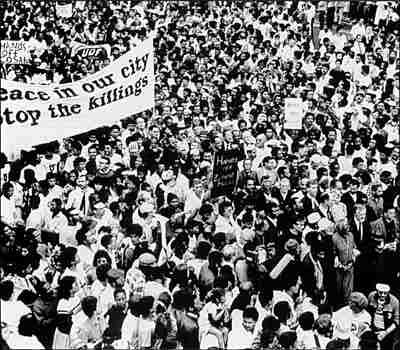
("The history of," )

Nice blog, some pictures would have been good!
ReplyDelete